Disc Bulge

Understanding Disc Bulge & Disc Herniation & How Chiropractic Care May Help

A disc bulge or disc herniation can cause significant pain, numbness, and weakness that affects your daily life and ability to move freely. The spine is made up of vertebrae (bones) with intervertebral discs in between that act as shock absorbers and allow movement. When a disc becomes damaged, compressed, or displaced, it may irritate or compress nearby nerves — causing localised or radiating pain.

At Rise Chiropractic & Wellness in Albion, Brisbane, chiropractic assessment may help identify spinal factors that could be contributing to your symptoms.

What Is a Disc Bulge or Disc Herniation?

The intervertebral discs have a tough outer ring (annulus fibrosus) and a soft, gel-like centre (nucleus pulposus). A disc bulge occurs when the disc extends beyond its normal boundaries without rupturing. A disc herniation (also called a slipped disc or prolapsed disc) occurs when the inner gel pushes through a tear in the outer ring.

Both conditions can place pressure on nearby spinal nerves or the spinal cord itself, leading to pain, tingling, numbness, or weakness.

Discs can be affected anywhere along the spine, but the most common locations are:

  • Lumbar spine (lower back) — particularly at L4/L5 and L5/S1 levels, often associated with sciatica
  • Cervical spine (neck) — particularly at C5/C6 and C6/C7, which may cause arm pain or weakness
  • Thoracic spine (mid-back) — less common, but can cause chest or abdominal symptoms

Common Symptoms of a Disc Bulge or Herniation

Symptoms vary depending on the location and severity of the disc problem, but may include:

  • Sharp or aching pain in the lower back, neck, or mid-back
  • Pain that radiates into the legs (sciatica) or arms
  • Tingling or pins-and-needles in the limbs, hands, or feet
  • Muscle weakness in the arm, leg, or foot
  • Pain that worsens with sitting, bending forward, or coughing/sneezing
  • Stiffness or reduced range of motion in the spine
  • Discomfort that improves with movement or lying down

It’s worth noting that some people have disc bulges visible on imaging but experience little or no pain, while others have significant symptoms. The relationship between disc pathology and pain is complex and individual.

Contributing Factors

Disc problems can develop gradually or suddenly. Common contributing factors may include:

  • Repetitive bending, lifting, or twisting — particularly with poor technique
  • Prolonged sitting or sedentary work habits
  • Age-related changes (disc degeneration)
  • A sudden injury, fall, or heavy lifting incident
  • Poor spinal posture over extended periods
  • Reduced core muscle support around the spine
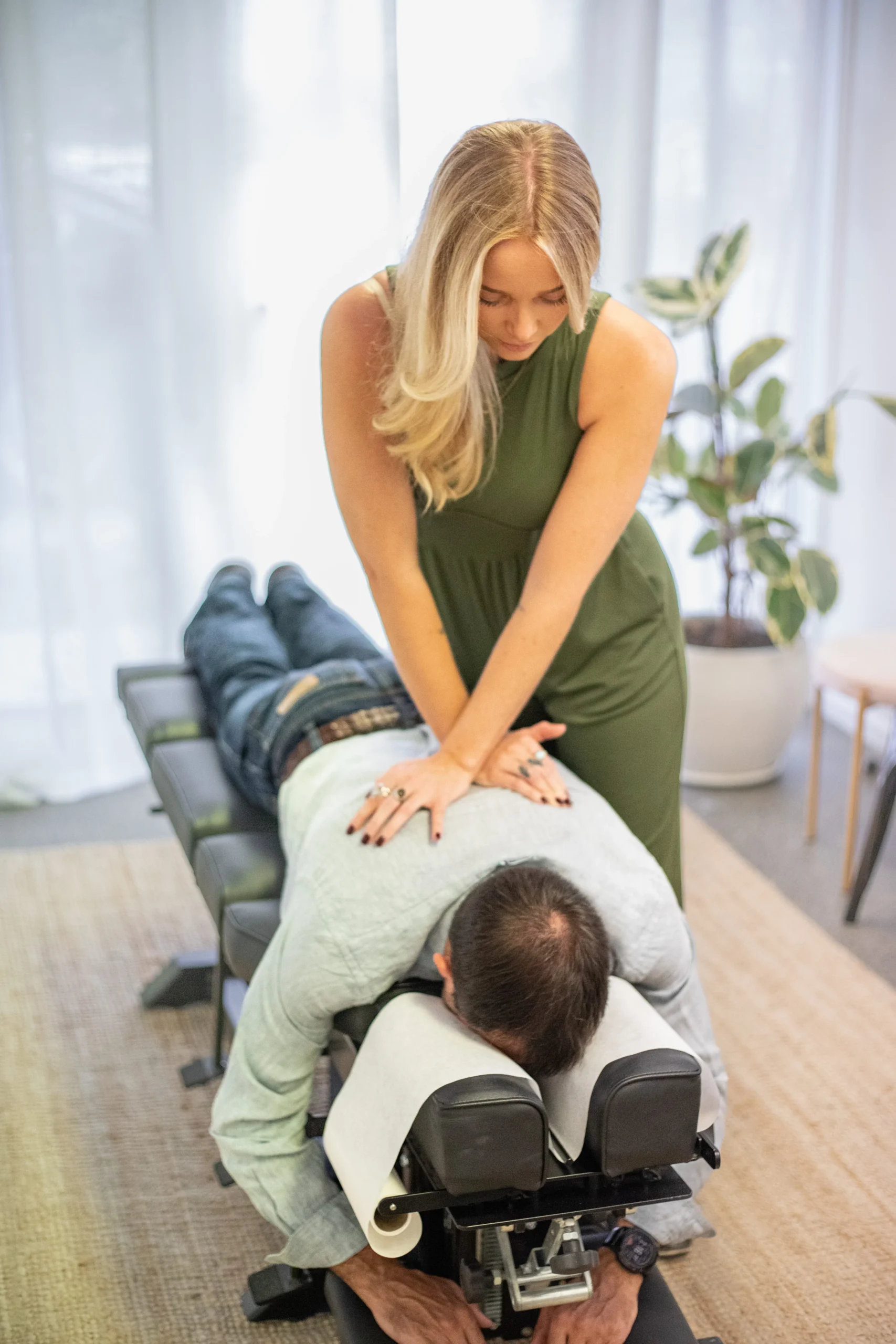
Dr Chelsea helping patient back pain

How Rise Chiropractic & Wellness May Help

At Rise Chiropractic & Wellness, we focus on non-invasive treatments designed to support your body’s natural healing process. Chiropractic care aims to relieve pain, improve spinal function, and reduce the risk of further damage to the discs. Our goal is to restore proper alignment and help your body heal naturally without resorting to medication or surgery.

Here’s how we may help:

Comprehensive Spinal Assessment

We begin by assessing your spine, posture, and movement patterns to understand the severity of your disc condition. We’ll also take the time to evaluate your medical history and lifestyle, ensuring we create a tailored treatment plan that suits your needs. If needed, we may refer you for imaging to better understand the condition of your discs.

Gentle Spinal Adjustments & Realignment

Through precise chiropractic adjustments, we seek to reduce pressure on the affected discs and surrounding nerves. By realigning the spine and improving joint movement, we look to support the body’s ability to heal itself and this may relieve the pain associated with disc bulges and herniations.

Targeted Therapeutic Techniques

In addition to adjustments, we may incorporate specific therapies such as soft tissue work, stretching, and rehabilitation exercises to support the muscles and tissues surrounding the discs. These therapies help to alleviate pain, improve mobility, and strengthen the muscles that support your spine, reducing the risk of further injury.

Holistic, Drug-Free Treatment

Chiropractic care offers a drug-free alternative to managing disc issues. By focusing on the root cause and supporting your body’s natural healing process, we provide a non-invasive solution that may reduce the need for pain medication or surgery.

When Should You Seek Help?

Please seek immediate medical attention if you experience:

  • Loss of bladder or bowel control
  • Numbness or tingling in the groin or inner thighs (saddle anaesthesia)
  • Progressive leg weakness or difficulty walking
  • Severe, unrelenting pain that is rapidly worsening
  • Disc symptoms following a significant injury, fall, or trauma

These symptoms may indicate cauda equina syndrome or another serious spinal condition requiring urgent medical review, which is outside the scope of chiropractic care.

Disc bulges and herniations don’t have to be a lifelong burden. With the right care and guidance, we seek to help you manage pain, restore spinal function, and improve your quality of life.

Let’s work together to support your spine.  Book your appointment today